
P1, P2 and P3 Finishing Standards in Steel Construction
In a previous article, we shared that Ferris is currently (2025/2026) developing its own unique machine: the automated P3 production line. This innovative machine will enable us to automate steel finishing according to the highest industry standards. But why are we doing this? And why is proper steel finishing so important?
In this article, we explain how the right surface preparation contributes to the service life of steel structures.
In This Article:
Understanding P1, P2 and P3 Finishing Standards
Understanding P1, P2 and P3 Finishing Standards
The finishing grades P1, P2 and P3 are defined in standards such as ISO 8501-3. They specify how thoroughly steel must be prepared before a coating is applied, including requirements for edge rounding.
P1 – Basic Preparation
For projects where coating performance requirements are less demanding, P1 preparation is often sufficient. Typical examples include indoor applications and temporary structures.
- P1 is the minimum preparation standard
- Only major imperfections are removed
- Suitable for indoor applications or structures with a limited service life
- Welds and sharp edges may remain relatively rough, provided they do not present a direct risk to coating adhesion or coverage
P2 – Enhanced Preparation
P2 is the most commonly specified finishing grade for industrial applications. Edges are mechanically processed to achieve a defined radius, creating a balance between performance and cost efficiency.
- More stringent than P1: sharp edges are rounded and welds are smoothed
- Suitable for moderate to severe service environments where improved coating performance and longer service life are required
- Most imperfections are removed, with sharp edges typically rounded to a recommended 2 mm radius
P3 – Fully Rounded Edges
For environments where steel structures must perform under harsh conditions for extended periods, P3 is essential. Typical applications include offshore facilities, chemical plants, and installations where regular maintenance is difficult or impossible.
- P3 is the highest preparation grade
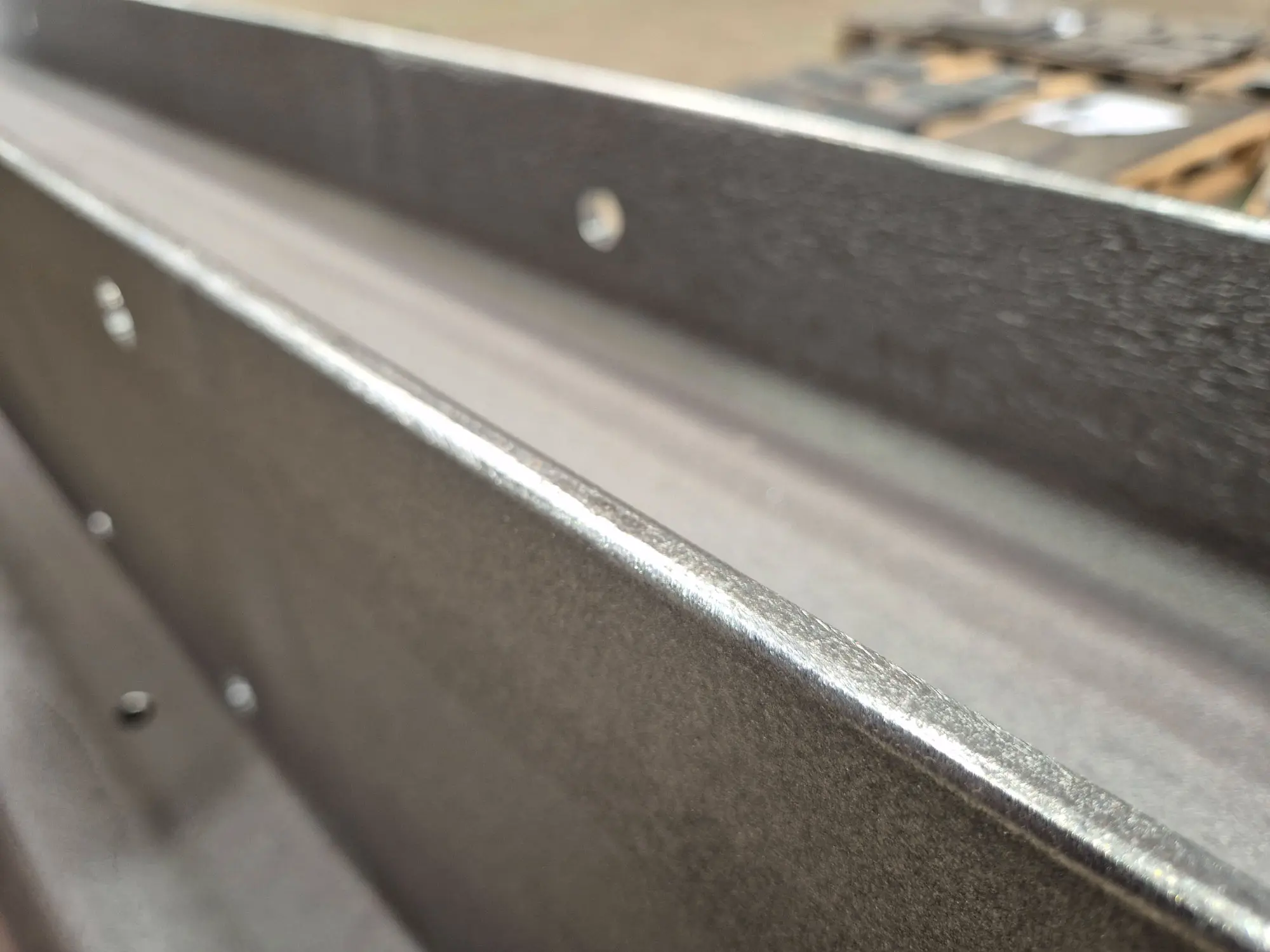
- All sharp edges are fully rounded with a minimum radius of 2 mm or greater
- Weld spatter is removed and welds are ground completely smooth
- Applied in highly demanding environments such as offshore, petrochemical, and chemical facilities, or projects where maintenance access is limited for long periods
- Designed to prevent corrosion and coating failures around welds and edges
Summary
Summary
In simple terms, the higher the P-grade, the more attention is paid to removing and rounding imperfections, resulting in superior coating performance.
In practice, this means:
- P1 → Lower costs, less preparation work, shorter service life
- P2 → Balanced performance and cost, commonly specified for industrial applications
- P3 → More expensive and labour-intensive, but essential in critical corrosive environments
Labour-Intensive Work
Labour-Intensive Work
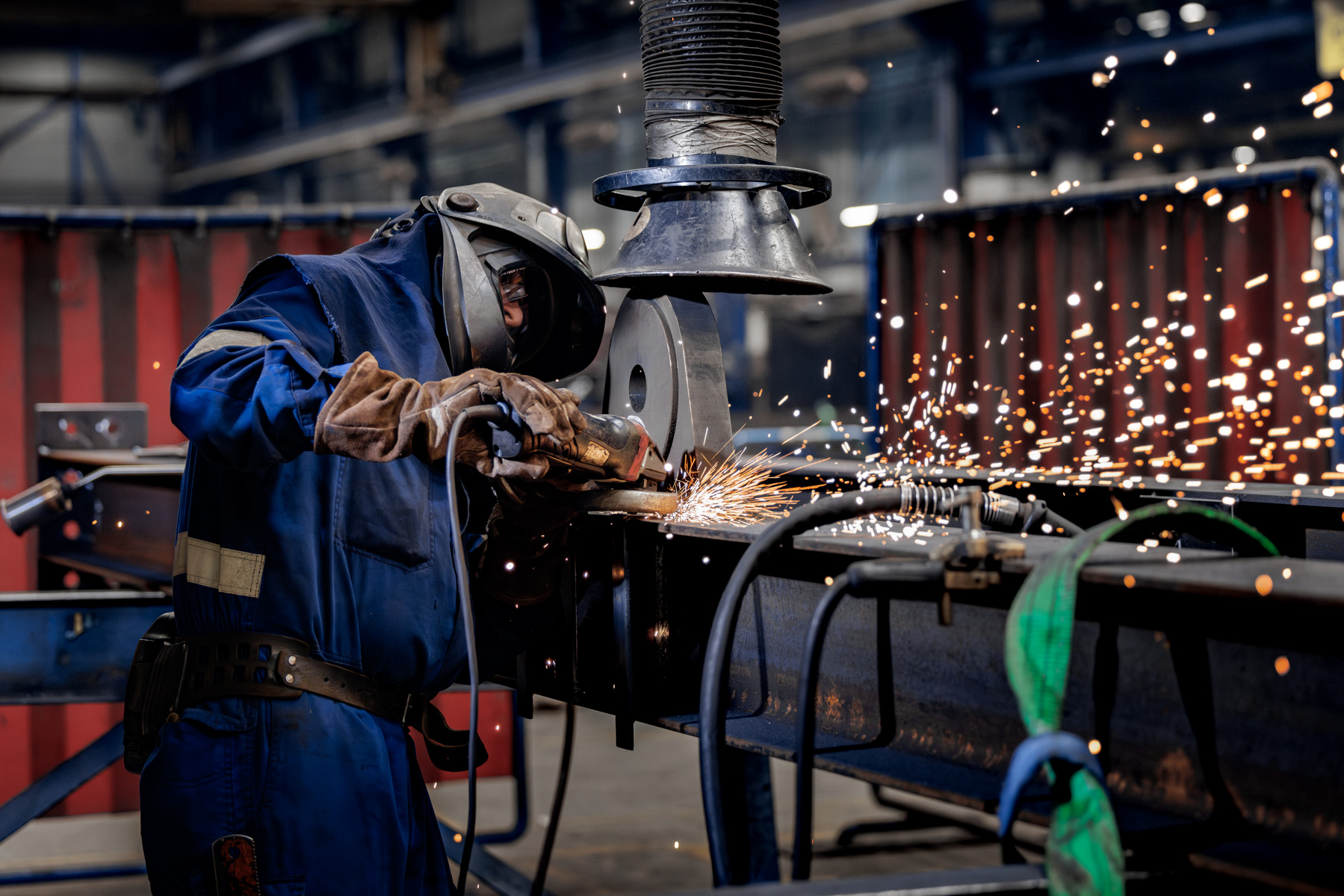
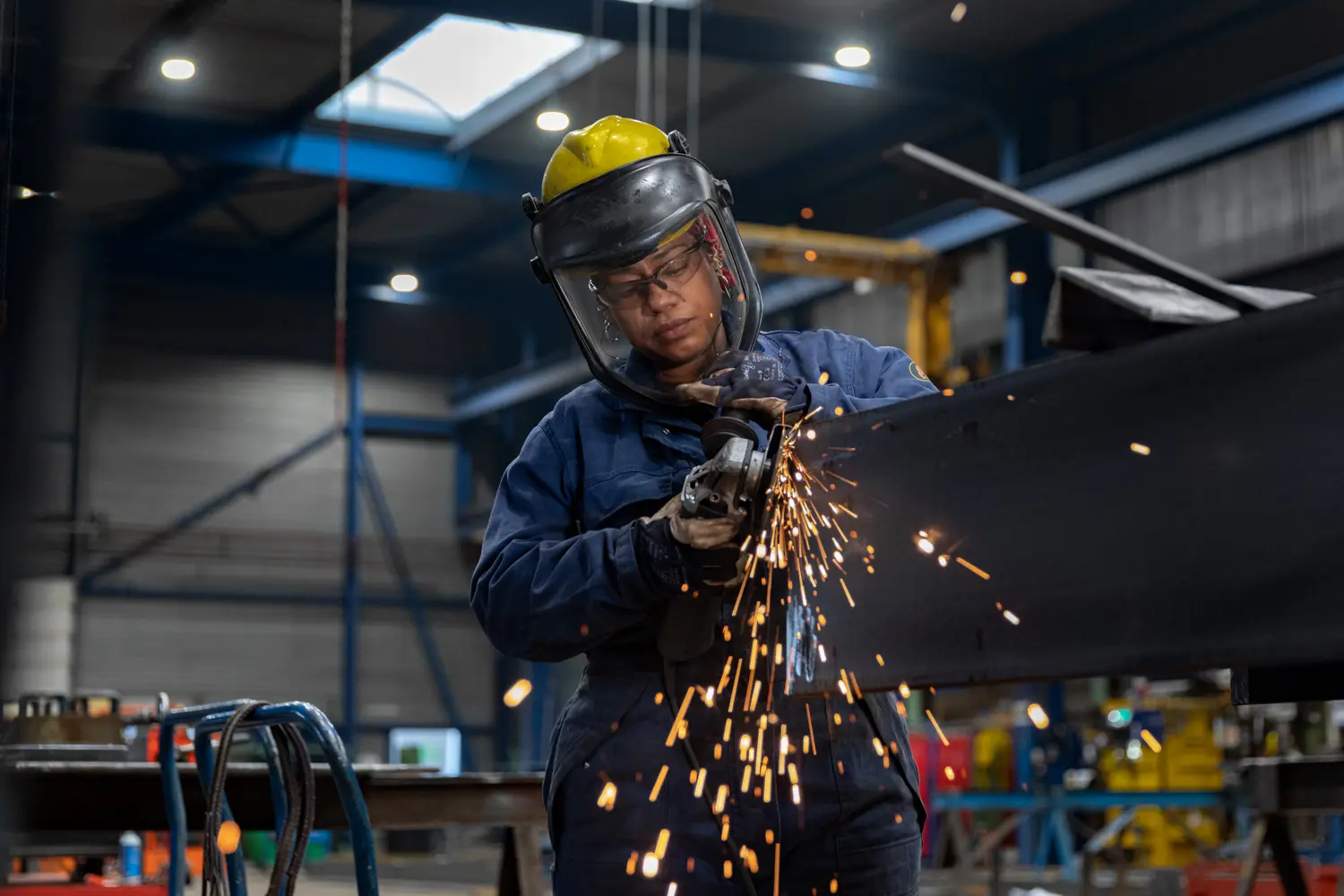
Traditionally, edge rounding is performed mechanically using grinding and milling equipment. This allows our specialists to create the required radius with great precision. During quality control, each component is inspected to ensure compliance with the specified finishing standard.
At Ferris, we serve many clients in industries such as manufacturing, chemical processing, and petrochemicals. As a result, a large proportion of our steel structures are finished according to the highest P3 standard. This is only possible thanks to the craftsmanship and dedication of our specialists—and we are proud of that.
However, achieving P3 quality also requires a significant amount of labour-intensive manual work. It demands considerable time, effort, and cost.
At least, that is the current situation. Because this is about to change.
Introducing Automated P3 Finishing
Introducing Automated P3 Finishing
Development of a New Production Line
What started as an idea on the workshop floor evolved into an innovative development project. Since no machine on the market met our requirements, we decided to take matters into our own hands and develop our own automated P3 production line.
-
Collaboration
Based on our concept, we partnered with Crombeen Engineering and machine manufacturer Wöhler GmbH to develop an entirely new machine. -
The Result
A patented machine specifically designed for the automated finishing of steel profiles in accordance with the P3 standard. -
The Benefits
This innovation will allow us to work faster, more consistently, and more efficiently. At the same time, reducing physically demanding manual work will significantly improve working conditions for our employees.
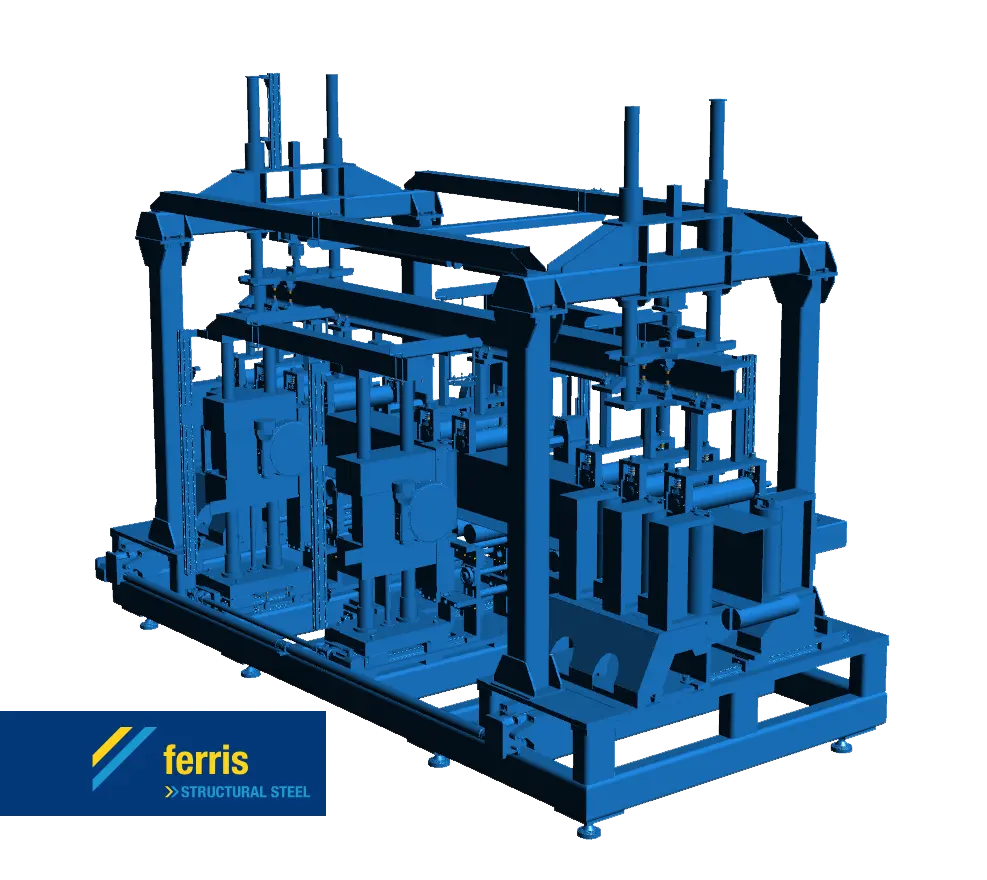
We are extremely proud of this project. Not only because it makes our work easier, but above all because it contributes to our mission: building strong solutions through strong partnerships.
In 2026, the first steel structures featuring this automated P3 finishing process will leave our workshop.
About Ferris
About Ferris
At Ferris, we thrive on challenging steel projects. Whether it involves constructing new industrial facilities, modifying existing plants, or supporting maintenance during shutdowns, we provide robust steel solutions that meet the highest standards.
We are energized by projects that go beyond standard solutions. That makes us the ideal partner for steel structures in demanding environments where an extra step is required.

Discuss your challenge with our experts
Discuss your challenge with our experts